What's the Difference Between Cocoa and Dutch-Processed Cocoa?
Every editorial product is independently selected, though we may exist compensated or receive an chapter commission if you buy something through our links. Ratings and prices are accurate and items are in stock as of time of publication.
If you're a chocolate lover who also enjoys baking, information technology'south important to know the differences between natural and Dutch-candy cocoa powders—and when to apply each.
You're at the store or scrolling through your favorite grocery app looking for ingredients for your favorite chocolate dessert and you see cocoa powder and Dutch-processed cocoa pulverization. Dutch-process sounds fancy, but is it really what you need? Find out what the differences between these two cocoas are and when you should be using them.
Get-go, What Is Cocoa Pulverization?
Cocoa pulverization—whether Dutch-processed or otherwise, is dried and pulverized cocoa solids. Information technology'southward naturally unsweetened, so recipes that use cocoa powder volition besides call for saccharide to get the gustatory modality you're looking for.
How Is Dutch-Processed Cocoa Different?
Natural cocoa powder is untreated, so it maintains its light brown color and is slightly acidic, with a pH between v and six.
Dutch-processed cocoa powder (also referred to equally Dutched chocolate, European-style or alkalized) is made from beans that have been washed with an alkali metal solution that neutralizes that natural acerbity and raises their pH to closer to seven.
The process gives the pulverisation a darker colour and a smoother, softer flavor. Dutch cocoa is also not quite as chocolaty every bit natural cocoa. It's milder overall (but withal tasty).
How to Utilise Dutch-Processed Cocoa in Baking
While you might think that cocoa and Dutch cocoa might exist interchangeable, we caution you non to make this commutation (at least not without doing a lilliputian homework). Using the right chocolate in blistering is cardinal!
Leavening agents like blistering soda require acrid to generate the reaction that gives bakes like cakes, cookies and quick bread their rise. If there's no acid in the recipe, the baking soda won't piece of work. In many cocoa-based recipes, cocoa powder (that's the natural stuff), provides the acid the soda needs. Nonetheless, if you substitute in Dutch cocoa, you might non get the bubbling and elevator you need.
If your recipe calls for baking powder or includes an acidic ingredient like yogurt, sour cream or buttermilk, feel gratuitous to sub in Dutch-processed cocoa for a smoother flavor.
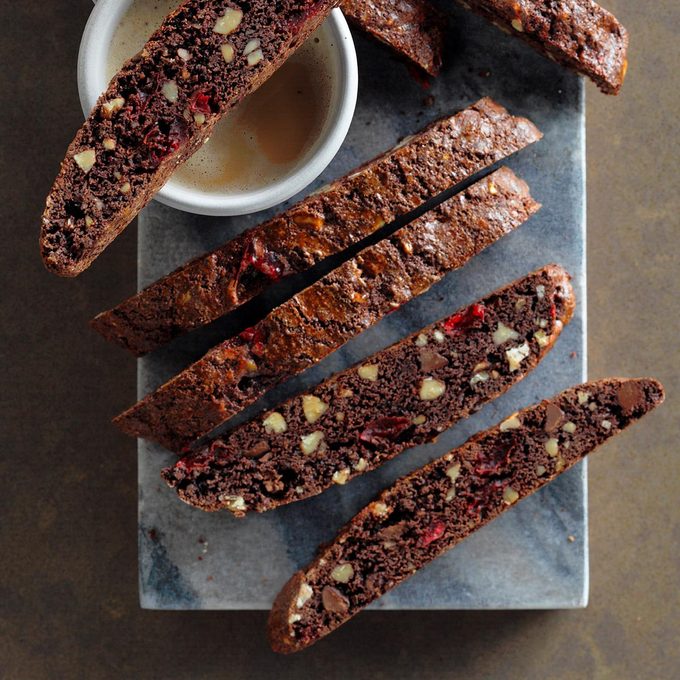
And if the recipe you're using doesn't use any leavening agents at all (frosting or fudge sauce or fifty-fifty these chocolate biscotti for case), Dutch-procedure cocoa pulverization and natural cocoa pulverization are interchangeable.
How to Store for Cocoa Pulverisation
If y'all're looking for a go-to cocoa pulverization for general baking, our look for a container labeled unsweetened, natural or 100% cacao. Our Test Kitchen uses Hershey's. For Dutch-process cocoa, look for Dutch, Dutch-processed, European or alkalized.
There is a third choice in cocoa powders besides: a combination of natural and Dutch cocoa. These blends are versatile and give you lot the smoothness of a European cocoa with the acidity that many recipes require.
Serious bakers might want to continue both Dutch and natural cocoas in their cupboard. And no need to rush to use them upward—cocoa powder has a long shelf life. Cheque out how long other baking staples last and invest in the all-time containers for storing them.
Source: https://www.tasteofhome.com/article/dutch-process-cocoa/
0 Response to "What's the Difference Between Cocoa and Dutch-Processed Cocoa?"
Enregistrer un commentaire